
Another peice of Sri Lankan history.
This is a letter from Lieut. D'Arcy Wentworth Jnr. to his father D'Arcy Wentworth, Snr.Description of his arrival in Colombo; incidents with the King of Kandy - expectations of war not realised; courtmartial proceedings against Lieut. Thomas Atkins; mutinous behaviour in the 73rd Regiment resulting from excessive alcohol (arrack) consumption.
Colombo 3rd. July 1814
My Dear Father,
I should not have delayed writing to you this long had I not been in hopes of being able to give you some accounts of our first campaign but after all your anxiety I am affeard we shall be disappointed. Upon our arrival at this place the King of Candy and his Adigar was at variance and it wasexpected that in this must soon come to a crisis & ithappened.
The King having sent for the Adigar (Prime Minister) instead of obeying the summons he placed himself under the protection of this government.There is a most extraordinary ceremony attending every thing that is done by the King. When he wishes to see a person who has incurred his displeasure a drawn sword wrapped up in a white cloth is sent to the person offending; it as much as to tell him that he must come and have his head cut off, for I believe there are very few who have thegood fortune to escape after being summoned in this way. The Adigar was not allowed to come farther than Hangweli (a small Fort on the Candian Frontiers)at first and from the frequent correspondence which was carried on with him we all expected a Candian War . Our hopes were in a short time as we then thought realised .
The Troops were ordered to hold themselves in readiness to march at a moments warning and Detachments from the Royal Artillery the second of Fourth CeylonRegiment were immediately sent off to Hangweli. Our Regiment was not to go till the last on account of their not being sufficiently inured to the climate whichis very unwholesome in the interior. People have been known to have gone up the country only for a day and tohave returned with the jungle Fever which is never got rid of without change of climate and then not always. It has raged at Trincomalee this season at a most alarming degree at one time there was not a single Officer in the 3rd Ceylon Regtcapable of doing duty, seven of them have died. After all the preparations that had been made orders unexpectedly received and I assure you very much unwished for werefor the Troops to return to their Duty. Thus were all our hopes blasted.
The King has since sent several threats to the governor and it is expected that he has sent to the coast for five regiments of Sepoys and only waits for the favorable season (the monsoon is now blowing) to commence operations — Colombo the place which our Detachment at present is is considered to be most healthy Part of the IslandThe Heat is excessive here at times and it is even dangerous to go out.
We all arrived in good healthafter a pleasant passage of two months havinglost but one man and two women and they have hitherto since our arrival been so fortunate as to lose but one who was suffocated by drinking arrack. Such changes have taken place in our Detachment. Pike soon after our arrival forwarded a letter demanding a Court Martial and Lt. Atkins was desired to give in His charges this he declined statingas his reason that his most Material Evidenceswere in New South Wales[.] Col. Kerr the Commandant of the Garrison informed us that we must either bring Captain Pike to a Court Martial or that he must be let out of Coventry nosuch thing being allowed in the army.
The Commander in Chiefhaving set his face against it and that if our officershad signed the Proceedings (which would have been done had it not been for myself and a few others) and had they been forwarded in that manner to his Royal Highness he has not the least doubt but it would seriously have affected the Regiment. Pike was in consequence let out of Coventry and is now with us a member of the ArtilleryMess —Lt Atkins's conduct since our arrival has been such as to have compelled Major Gordon to bring him toa Court Martial: he was continually drunk on Parade and would sit down in company with any blackguard who would give him a glass of grog. The Major no less than three times cautioned him in the presence of the whole of us against such conduct declaring that if he still persistedhe would be reluctantly compelled to bring him to a Court Martial nothwithstanding this and the repeated cautions given by myself and others he still persisted.
Returning home one night about half past eight OClockI heard a noise in one of the Ditches in the Fort and upon examining I found it was Lt Atkins who was at this time Officer of the Day had fallenover the wall & was so drunk that it was with the greatest exertions I was able to get him out and I have not the least doubt had I not providentially passed by at the time but that he must have been drowned. Some way or other these repeatedirregularities got to the ears of the Commandant who orderedMajor Gordon to bring Lt Atkins to a Court Martial; he was then advised to forward a memorial to the Governorstating his services and for leave to sell out; this he would not allow. I was told before the Court Martial that he intended abusing the whole of us on the Court Martial and me in particular as he said he had been told I was the cause of his being broughtforward but I could never get him to tell me who it was and must only place it among the numerous other falsehoods he has told. His Defence was a most scurrilous one the production of a celebrated blackguard here who was kicked out of the second Ceylon Regiment, for his infamous conduct[.] Pike and myself were the two who he principally attacked.
The whole of it was ordered tobe expunged by the Court in whose opinion he was lowered by it. I shall refrain repeating to you the language or the subject but it was of such a nature that I can neither forget or forgive as long as I breathe.He intends I understand returning to New South Wales as [soon]as his sentence is made known which cannot be more than twelve months and has had the impertinenceto say that he will inform you of my conduct towards him.
We have had great troublewith the Detachment since our arrival. Several men have been tried by General Courts Martial; the Bearer of this is one of them he was sentenced to be shot but the Court in consideration of his youth good character recommended him to the Governor for Mercy who was pleased to commute the Sentence for transportation for life. I hope Father you will use your endeavours to his misfortune.
Until this unfortunate business he was a lad of the best character a quick well conducted lad and I am well convinced that were it not for their infernal arrack which they have here he would never have been guiltyof the offence striking his superior officer Lt ConnorThere are at this moment two of our men trying for a like offence by a General Court Martial who willbe both shot to a certainty.
The General and Commandant were witnesses to their outrageous conduct and he then told them that they had once experienced his lenity but whatever might now be the sentence that sentence he would carry intoeffect we are anxiously looking for the arrival of the remainderof the Regiment I shall be for some of the outpost as soon as it takes place and I assure that I shall considerit as the greatest blessing that can happen to me I do not thinkat this present moment there is a stricter Garrisonin the world; we have not a moment which we can call our own and are drilled to that degree that I am sureI shall not be able to stand much longer.
I shall now once more entreat you to do some for the poor lad (Douglass) if you possibly can and with Wishes & prayers for your welfare and Happiness
I remain My dear Father your ever affectionate Son
D Wentworth
Showing posts with label Interests. Show all posts
Showing posts with label Interests. Show all posts
Friday, November 9, 2007

Tuesday, November 6, 2007
NSBM Special Report - by J. Bennett of Decibel Magazine
An article i found browsing the Decibel Mag blog. Very well written. Kudos to J.Bennett.
Does Black Metal have a problem with Brownshirts? Or is the problem someone else's? Decibel investigates the peculiar world of National Socialist Black Metal.
"They were Nazis, dude?
They were threatening castration, Donny. Are we gonna split hairs?"
—Memorable exchange from The Big Lebowski, a very funny movie produced and directed by a couple of very funny Jews.
Rob “Darken” Fudali (Above)
As if acting out some bizarre atavistic saga—half comedy, half high drama—our protagonists assume their marks in the theatre of the absurd. Somewhere not-so-deep in the sub-underground, the forces of National Socialist Black Metal—henceforth known as NSBM—are circling their Panzer tanks (or at very least their amplifiers) against the evil forces of Jewry, Niggerdom and Fagitude. No, wait—the NSBM dudes are the evil ones (Evil is, after all, a requirement of all black metal) and they’re aligning themselves against the Zionist Occupation Government, jungle fever and same-sex marriage. Or is it Israel, multiculturalism and gay bars? Point is, if it ain’t white—and straight, and pagan—it ain’t right.
Or so believe the NSBM hordes, most of whom prefer to think of themselves as warrior-intellectuals rather than musicians; as defenders of heritage and folkways rather than standard-brand racists. Not content with black metal’s unholy trinity of Satanism, corpsepaint and intentional misspellings, the propagators of NSBM see in Burzum mastermind Varg Vikernes not just a convicted murderer or a musical trailblazer, but an ideological messiah. As the self-appointed Charles Manson of Norwegian black metal, Vikernes started rolling swastika-style—issuing screeds against Jews and “colored people” and declaring his relation to Norwegian Nazi political sympathizer Vidkun Quisling—shortly after his arrest for killing Mayhem guitarist Øystein Aarseth in 1993. Hypnotized by Vikernes’ dark charisma and shrewd intellect, a fringe element of the nascent black metal underground took heed. As a result, many anti-fascist and anti-racist action groups have sounded the air-raid sirens for the second coming of the Luftwaffe, but the majority of NSBM’s known adherents don’t seem to be doing much more than toeing White Power’s party line, dropping a few racial slurs or slapping swastikas on their album covers. But maybe that’s an oversimplification.
How Many Polish Black Metal Nazis Does It Take to Screw in a Lightblub?
If Varg Vikernes is NSBM’s messianic ideologue, Rob “Darken” Fudali is one of the genre’s most prolific and revered practitioners. Fudali’s primary band, Graveland (he has another project called Lord Wind), emerged from the forests of Poland in 1992, and has since recorded a slew of albums and EPs (roughly half of which Fudali plays all the instruments on)—including 1997’s Following the Voice of Blood (featuring the track “White Hand’s Power”), 1999’s Immortal Pride and the band’s latest full-length, Fire Chariot of Destruction—many of which were released on Germany’s No Colours Records. Almost unanimously worshipped within NSBM circles, some of Graveland’s earlier recordings are even considered black metal classics by those who do not share Fudali’s racial beliefs. Nonetheless, Darken no longer considers his music black metal. “I do not think Graveland is an NSBM band,” he tells Decibel through an interpreter. “Graveland is regarded as a NSBM band because of my political convictions, [which] most people would call extreme right-wing National Socialist convictions.”
Most of Fudali’s beef with black metal seems to stem from the genre’s satanic roots in both the Church of Satan-sanctioned stylings of Mercyful Fate and the cartoonish shock tactics of Venom. “I do not want my band be identified with Satanism,” he says. “Black metal will always be identified with Satanism because Satanism is inseparably connected with black metal. From the very beginning of Graveland we have combined paganism with Satanism. It happened because people I played with were Satanists and they were not interested in paganism. Due to these differences, we finally started to walk separate ways and Graveland became [a] one-man band again. I understood that I could not support Satanism [because it] was a part of Judeo-Christian religion. In the Third Reich, Satanists would end [up] in gas chambers.”
Oddly enough, Fudali is not particularly interested in being affiliated with National Socialism, either. “I do not see any point in referring to NS because I do not see any point in referring to any ideologies that lost,” he points out. “It is against logic and the eternal law of evolution. I think that white men should search for new ideas that would be well adapted for the current reality and the problems of [the] contemporary world.”
Fudali’s immediate surroundings in the contemporary world are overwhelmingly white. As of November 1999 (according to that month’s issue of Central Europe Review), 98% of Poland’s population was ethnic Polish. That same year, the country’s Jewish population represented less than half of a percent. Nonetheless, Fudali believes that white people “are at the edge of extinction.” Like Vikernes, he adheres to a form of pagan nationalism that promotes the segregation of all cultures in order to promote the advancement of the Aryan race. “Pagan beliefs are the system of values that is the precious heritage of my folk,” he offers. “Its achievements have assured [our] survival and development for thousands of years. I reach them to re-build my spirituality. Other people do the same. The world of right-wing ideologies has always been strongly connected with religion and spirituality. It distinguishes us from leftists. People who experience Graveland’s creativity sometimes experience [a] kind of awakening.”
It is unclear if these people follow Fudali’s lead by carrying swords and dressing up like medieval warriors in their press photos. Or if they’re actually awake while they are doing it.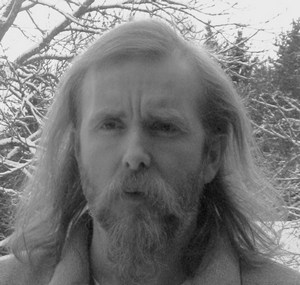
Varg "Kristian" Vikernes (Above)
Pagan War Machine
Ymir G. Winter is the guitarist for the New York-based NSBM band Grom. Winter says his father openly advocated fascism and that his grandfather (on his mother’s side) fought for Germany in World War II. “Couple that with growing up in the racial mosaic of New York City, and I was White Pride from early on,” he explains via e-mail. (In his transmissions, he consistently capitalizes the word White while using a lower-case “j” in the word Jewish.) Winter also prides himself on the fact that Grom is one of the few NSBM bands in the world that actually plays live. “During many of our shows, we will spit fire and then set an Israeli flag ablaze,” he explains. “When regulations don’t allow this, we have the crowd stomp the Israeli flag and spit on it. [But] a Grom show is not a redneck rally. We do not banter on about ‘kikes and niggers.’ I am more concerned with praising Aryanism and Paganism than I am with attacking non-whites and using foul language.”
In addition to his musical pursuits, Winter is a “proud member” of the National Alliance, the West Virginia-based White Nationalist group founded by Dr. William Pierce. Pierce (1933-2002) was the author of The Turner Diaries, the futuristic race-war fantasy novel that inspired Timothy McVeigh to detonate a truck full of explosives in front of the Alfred P. Murrah Federal Building in Oklahoma City in 1995, killing 167 people. (In The Turner Diaries, which Pierce published under the pseudonym Andrew MacDonald in 1978, the story’s protagonist detonates a truck full of explosives in the basement of FBI headquarters.) In early 1999, Pierce bought Resistance Records, the infamous White Power music clearinghouse that hocks everything from skinhead music and hatecore to RAC (Rock Against Communism) and NSBM. The label is currently pimping the shit out of “white nationalist folk duo” Prussian Blue, which consists of two blond, blue-eyed 13-year-old twin sisters, Lynx and Lamb Gaede, who play folk versions of Skrewdriver songs and original odes to Rudolf Hess at White Power picnics and love-ins. The Gaede sisters were recently interviewed by Diane Sawyer on ABC’s Primetime.
It just so happens that Ymir Winter works at Resistance, where he recruits bands, handles CD trades, and writes for the label’s magazine, aptly entitled Resistance. “The goal of Resistance is to steer White youth away from the jewish MTV lifestyle which will have them worshiping hip-hop culture and have them thinking that acting and looking black is ‘cool,’” Winter explains. “Resistance wants to promote Aryan awareness and does so by using music as a recruitment tool and as a vessel for the National Socialist/White Power movement. I don’t think that Resistance has taken an official stance as to [which is] the best form of White Power music, but I think the scope of NSBM’s appeal and marketability has been realized. Ten years ago, hatecore was cutting edge and was the main musical structure for the National Socialist/White Power scene. These days, more and more it is NSBM.”
To this end, Winter is also the label manager of Unholy Records, an NSBM subsidiary of Resistance that released a double-disc Burzum tribute album in 2002 (Visions: A Tribute to Burzum), Nocturnal Fear’s Sterilize and Exterminate and Nachtmystium’s Reign of the Malicious. Though the presence of the latter on an NSBM label may surprise many of the band’s more recent fans, it is important to note that Nachtmystium has always been an apolitical band, and guitarist/vocalist Blake J. (AKA Azentrius)’s more recent musical endeavors—specifically with black metal supergroup Twilight and his own label, Battle Kommand—are not even remotely affiliated with National Socialism or White Power. “In the past, we’ve had some indirect ties to labels and bands that are part of the NS scene,” Azentrius concedes. “At one point not too many years ago, it wasn’t uncommon for NS labels or bands to trade and work with non-politically motivated bands and labels because at the end of the day, we’re all trying to promote, release, and be involved with music—all politics aside. Today it seems like there’s less of a connection, at least for me and my label. We don’t oppose people’s right to be ‘NS’ or whatever—that’s a personal choice, and if you live in the USA, you have the right to that opinion. Even though I personally, my band(s) and my label have absolutely no interest in being a part of that scene, I will ALWAYS take their side when it comes to their freedom of speech being imposed upon.”
Visions - A Tribute To Burzum (Above)
Whatever Happened to Freedom of Hate Speech?
"Say what you will about the tenets of National Socialism, Dude—at least it’s an ethos"
—Yet another memorable line from The Big Lebowski
Over the past 15 years, minor controversies have surrounded various black metal bands’ choices of words and symbols. Mayhem used old SS Totenkopf insignias on their t-shirts; Emperor guitarist Samoth started a band called Zyklon (originally Zyklon-B, the name of a Nazi gas-chamber fumigant); most infamously, the slogan “Norsk Arisk Black Metal” (translation: “Norwegian Aryan Black Metal”) appeared on the back cover of Darkthrone’s 1994 album Transylvanian Hunger. Prior to the album’s release, Darkthrone drummer/lyricist Gylve Nagell (AKA Fenriz) apparently sent a fax to the band’s UK-based label, Peaceville Records, containing text he wanted to include on the album’s sleeve: “We would like to state that Transylvanian Hunger stands beyond criticism. If any man should attempt to criticize this LP, he should be thoroughly patronized for his obviously Jewish behavior.” Peaceville promptly shit themselves and issued a press release stating that the label would honor Nagell’s request but would “refuse to promote or advertise” the album. Darkthrone then delivered a convoluted apology that claimed, “In Norway, the word ‘Jew’ is used all the time to mean something that’s out of order… When we wrote ‘Jewish behavior’ in our previous press statement, we could have easily written, according to the Norwegian language, ‘stupid’ instead.”
When contacted by Decibel, Darkthrone guitarist/vocalist Ted Skjellum (AKA Nocturno Culto) was hesitant to comment. “After the blow we took back in the midst of last decade, I kind of said to myself that we should not ever let some losers try to fry us again,” he typed via e-mail. “You see, people just love to put other meanings to things people say about politics. FUCK THEM ALL. It’s like people don’t want to wake up and face reality. Everybody seems to want to live out a fuckin’ lie.”
There are at least a few people in NSBM circles who think bands like Darkthrone, Zyklon and Mayhem are poseurs. “Most of these Norwegian bands’ ideology is cheap and they will sell it for anything they can get—like a five dollar crack whore,” says Rich Mills, owner of Vinland Winds Records in New York City, an NSBM label that releases music by Grom, Graveland and Australian bizarros Spear of Longinus. Like many NSBM acolytes, Mills harbors a unique veneration for Varg Vikernes: “Burzum is the only Norwegian band that remains unapologetic and literally convicted of his beliefs.”
Mills says he has been “loosely affiliated” with the National Alliance in the past, but insists that he will always remain a “lone wolf.” Under the nom de guerre Grimnir Heretik, he is the vocalist for Grand Belial’s Key, a band that has often been saddled with the NSBM yoke, even if it isn’t necessarily self-applied. Still, GBK’s latest album, Kosherat, closes with two Chaos 88 covers (including the song “Holy Shit,” which features the lyric, “I wanna beat you like the Jew that you are”). Mills believes there is a double standard applied to the traditionally anti-religious stance prevalent in most forms of extreme music. “It seems you can talk about killing Jesus and how much Christianity sucks but if you mention it being linked to or having its roots in Judaism you will be totally boycotted,” he points out. “Attacking Christianity is okay, but [attacking] Judaism is not. You will be labeled an anti-Semitic Nazi Racist. That is the true hypocrisy of the so-called extreme metal genre. Freedom of speech just as long as what you say is what they agree with.”
Another bone of contention within the NSBM community is the fact that death metal and gore bands can get away with graphic lyrics about murder and torture—like Cannibal Corpse’s infamous “Stripped, Raped and Strangled” and “Fucked With a Knife”—but criticizing Jewish doctrine or claiming to support a dead political platform like National Socialism is strictly verboten. “Most people in the black metal scene are either pro-NS or indifferent to it,” Mills speculates. “The only people who complain are [in] the death metal scene, [and] claim to be so extreme. I guess [lyrics about] raping your mother and having sex with dead babies are okay, but looking out for your own kind isn’t. Maybe they don’t want to really offend their Jewish record labels by claiming affiliation with any extreme right-wing political faction and get themselves dropped.”
Ymir Winter totally agrees: “The metal scene has become a politically-correct realm for modern-day hippies and apologists. These people ‘Hail Satan’ and sing about sacrificing infants and then some, yet get all upset at the mention of anti-Semitism. Somehow it has become fact that one cannot even QUESTION Jewish doctrine, society, ethos, or race without being branded an anti-Semite.”
Absurd - German NSBM Band (Above)
Kike Bastards vs. Aryan Assholes
Sometime in 1999, just after Grom released their debut EP, Pagan War Machine, on Vinland Winds Records, they played a show at the Voodoo Lounge in Queens. “In those days, we opened for many mainstream acts such as Deicide and Incantation,” Winter explains. “I think we were playing with Krisiun that night and we heard that one of the main writers or editors from Metal Maniacs was coming to review our show but had an agenda to smear us regardless of how well we played. Anyway, we caught wind, confronted him and my old bassist ended up grabbing the guy’s notepad and backpack and hurling [them] down the boulevard. We then grabbed the guy by his collar and tossed him.” Grom’s Wikipedia.com entry—which Winter claims was not authored by anyone in the band—refers to this incident as, “The beating of a Jewish member of the Metal Maniacs staff by one of the now-former members of Grom.”
“I’m the only Jewish editor the magazine has ever had, and that never happened to me,” says former Metal Maniacs editor Mike Greenblatt, AKA Mike G. “Maybe one of my writers went to see them, but I’ve always been heavily anti-Nazi and anti-White Power. I used to make a point of it. I remember when I interviewed Lemmy from Motörhead, he was talking about Hitler and I questioned him on it. He said Hitler was the first rock star, and of course I knew what he meant, but at the time, he had gotten me drunk on Jack Daniel’s and the room was spinning around while he was spouting this shit about Hitler, and I was like, ‘Wait a minute—I’m a Jewish guy! I don’t get into that shit!’ So I always wore my Jewishness on my sleeve as sort of a rebellious thing against these White Power assholes.”
In fact, the history of Greenblatt’s nom de plume dates back to hate mail sent to the Maniacs office when he started at the magazine in 1989. “The publisher and I started receiving death threats, like, ‘Die, you kike bastard!’ and all this shit,” he explains. At first, Greenblatt resisted the publisher’s suggestion he abbreviate his last name, but then eventually agreed, albeit for a completely different reason. “The final turn came in 1991 when I started a country music magazine. I understood, business-wise, that if the kids found out that the editor of Metal Maniacs was also the editor of a country music magazine, it would hurt my credibility in the metal world.”
Nazi Watchdogs
In the fall of 1999, the Southern Poverty Law Center’s quarterly magazine, Intelligence Report, featured an article entitled “Sounds of Violence.” As though narrating a trailer for Reefer Madness, the authors warn of “a new generation of metal bands, known as the black metal underground, [that] is so extreme it makes Marilyn Manson look square.” They then claim that Varg Vikernes was imprisoned for “beheading his best friend”—in actuality, Vikernes stabbed Aarseth to death, and the two hadn’t been particularly friendly for some months prior to the murder—and make a vague attempt to link the Columbine shootings to black metal: “Words, for these youths, often become action. Among others, Dylan Klebold and Eric Harris, who murdered 12 of their classmates and a teacher at Columbine High School in Colorado last April, were said to have been influenced by this kind of music.”
Next, they vilify Lords of Chaos co-author Michael Moynihan for making allegedly racist and fascist comments and for his membership in “the black metal band Blood Axis.” The main problem with this particular part of the article—besides being totally misleading—is that Blood Axis is not a black metal band. Rather than interview Moynihan, the authors of the article excerpted quotes from an issue of Compulsion zine published in 1998. “I have no problem being called a fascist,” Moynihan is quoted as saying. “If fascism will restore some sense of order, discipline and responsibility to the world, then I am all for it.”
Two of the authors of the SPLC report, John Lunsford and Justin Massa, also wrote portions of the anti-White Power music campaign Turn It Down’s December 1999 tract Soundtracks to the White Revolution: White Supremacist Assaults on Youth Music Subcultures, which features chapters on NSBM and a sub-section (in the chapter on noise bands) on Moynihan specifically. Unsurprisingly, the same Compulsion quote appears in both texts.
“The reports on black metal by these watchdog groups represent some of their most shoddy investigative work,” Moynihan tells Decibel. “This not only shows the low level of understanding they have for the subject matter, but it calls the accuracy of their work as a whole into question. Not that these kind of issues probably concern them, however, since the real goal of these reports is neither historical nor journalistic accuracy—it’s to keep their readers sufficiently alarmed so that they will continue to donate money to the coffers of the watchdogs. Of course something like black metal, with all of its apocalyptic overtones, suits such a purpose perfectly.
“Regarding their attacks on me, these too have been packed with misinformation and outright errors,” Moynihan adds. “They ignore my artistic work as whole—it’s clear they’ve never even listened to the records they’re condemning—and merely focus on a few provocative statements selectively culled from interviews done nearly 15 years ago. These statements become far more ambiguous when contextualized into everything I’ve said and done over the years. From the very beginning I have said that Blood Axis represents a grey area of Nietzschean amorality and paradox; the inability of people to handle it, or even grasp it on these terms, only proves how successfully it embodies this.”
The Turn It Down campaign was launched in 1999 by the Center for New Community, a faith-based non-profit organization stationed in Chicago. According to Devin Burghart, the Director of the CNC’s Building Democracy Initiative and editor of Soundtracks to the White Revolution, the CNC is “a civil and human rights organization concerned about social, racial and economic justice.” (The third author of the SPLC report, Eric Ward, is currently on staff at the CNC; Massa is a former CNC staffer.)
“Part of the work we’ve done here at the Center for a number of years has been to help counter White Power music and particularly the growth of the NSBM phenomenon,” Burghart adds. “We’re part of a network of organizations that works to counter this type of music internationally.”
Soundtracks to the White Revolution’s chapter on NSBM opens with a list of 21 US-based NSBM labels and distributors. While most of the labels on the list deal at least partially if not exclusively in NS titles, the presence of LA-based Southern Lord Records—known for decidedly non-Nazi black metal releases from Craft, Lurker of Chalice and Xasthur—was initially puzzling. Even more baffling is the fact that, in 1999, when Soundtracks to the White Revolution was published, Southern Lord specialized almost exclusively in doom and drone bands like Goatsnake and Sunn O))). Asked which Southern Lord title or titles Turn It Down considers National Socialist in nature, Burghart can’t recall. “I’d have to go back and look to see what they were carrying at the time,” he says. “But it was clear—we had a pretty long discussion about the threshold these labels had to cross before we were gonna list them. It wasn’t that they just had one Burzum album—it had to be far more than that.”
Turn It Down’s NS threshold remains a mystery. Although Southern Lord declined to comment for this article, it seems the error potentially occurred in conjunction with the label’s very first release, Dommedagsnatt, by now-defunct Seattle doom mavens Thorr’s Hammer, which included Southern Lord owner Greg Anderson and fellow Sunn O))) guitarist Stephen O’Malley as members. Thor’s Hammer—with one “r”—is the name of a Polish NSBM band featuring former Graveland drummer Capricornus.
Hating for Dollars
"Vee vant zee money, Lebowski."
—(You guessed it.)
Despite the flaws in their reporting, the CNC and the SPLC are genuinely concerned about the use of NSBM—and White Power music in general—as a recruitment tool for organized white supremacist groups like the National Alliance. But even Burghart admits that most of the evidence that NSBM is successfully recruiting serious White Power acolytes is purely anecdotal. “White Power groups like the National Alliance have attempted to use the NSBM packaging and genre to recruit a different type of disaffected young person into the white supremacist movement,” Burghart explains. “Most of the NSBM bands used to get the cold shoulder from old-line White Power bands in the hardcore and oi scenes. But with the popularity of bands like Burzum and Graveland, the foundation was laid to bring those folks in. But frankly, these [organizations] don’t have enough critical mass to draw people from. I think the conundrum they’ve run into with the NSBM scene is that they were late to get involved and unable to capitalize.”
Which begs the question: Does any White Power organization that wants to be taken seriously in the political arena really want to be associated with a bunch of dudes running around in corpsepaint and wielding swords? “That actually has been a topic of discussion,” Burghart says. “There are those in the white supremacist movement who like the fact that most of the members of the NSBM scene are fairly well-educated and have a more elite or aristocratic perspective than the more working-class followers of the White Power/skinhead scene. But for some, the gruff sound of black metal and, you know, the corpsepaint, isn’t that attractive.”
Mark Potok, Director of the SPLC’s Intelligence Project and editor of the Intelligence Report that ran the “Sounds of Violence” article back in 1999, says that William Pierce was initially reluctant to bring Resistance Records under the National Alliance’s ivory umbrella for those very reasons. “It was very painful for William Pierce to buy Resistance,” Potok explains. “He couldn’t stand the music. His thing was Wagner and polkas—no kidding—he thought that stuff was ‘healthy’ music. He used to talk about the ‘Negroid rhythms’ of American pop music.”
This is a sentiment echoed by Varg Vikernes, who has done much to distance himself from black metal in recent years because of metal’s foundation in rock ‘n’ roll, and by extension, the blues. However, Pierce was able to ignore the black metal’s lack of Aryan purity when the NA’s Resistance-bolstered bank statements began rolling in. “Between dues and Resistance, the National Alliance was grossing close to a million dollars a year at its peak in 2002, right around the time Pierce died,” Potok explains. “He thought the music was disgusting, but he knew it was important to the movement, and he recognized it as a very important money-making tool.”
Bark vs. Bite
Despite the often alarmist nature of the reports issued by both SPLC and Turn It Down, neither Potok nor Burghart was able to cite a substantive act of violence committed by a member of the NSBM community since “Sounds of Violence” and Soundtracks to the White Revolution were published. Still, Burghart insists that NSBM is potentially more dangerous than the documented violence of skinhead groups and other White Power bands. “I think NSBM is as serious as any genre in the White Power scene—if not more so, because of the glorification of ultra-violence,” he says. “We’re only talking about a scene of maybe a few hundred people, but within that scene, there is a high propensity for violence.”
The closest Burghart comes is the case of Leo Felton, a six-foot-seven, 225-lb straightedge skinhead arrested in April 2001 for passing counterfeit bills at a Dunkin Donuts in Boston. At the time of his arrest, the 30-year old Felton had already served 11 years in prison for the attempted murder of a black cab driver, and was allegedly a member of the anti-Semitic World Church of the Creator and the Outlaw Hammerskins. Police apparently found bomb-making materials in Felton’s apartment, and believed he was conspiring to blow up the New England Holocaust Memorial. But Felton’s connection to NSBM is tenuous at best: according to articles that Burghart co-authored (with Justin Massa) in the October 2000 and July 2001 issues of the British-based anti-fascist magazine Searchlight, Felton read an NSBM-related zine called Fenris Wolf when he was incarcerated in New York on the attempted murder charge. Fenris Wolf was published by Nathan Pett, who hid convicted murderer and fugitive Hendrik Möbus—of the German black metal band Absurd—at his home near Spokane, Washington. Fenris Wolf was also affiliated with the Pagan Front, a loosely knit organization collectively known as “The Hammer of National Socialist Black Metal.” While Felton was killing time behind bars reading Fenris Wolf, he also slit the throats of two black inmates who allegedly tried to rape him.
The irony of all this is that Felton’s father is black.
Nokturnal Mortum - NSBM from Ukraine (Above)
Welcome to RaHoWa!
Of course, there are those who will think that simply giving NSBM editorial space is an implicit form of support for its underlying ideologies. As a metal journalist who has written extensively about NSBM bands in publications like Terrorizer, Metal Maniacs and Unrestrained, Nathan Birk has come up against this kind of thinking repeatedly. “I just think that’s a bad symptom of modern American social mores that I’m expected to take these people to task,” he says. “I don’t really listen to ambiguous, please-all demographics of music—I prefer bands that lay it on the line, be they far-right or far-left. What about a band like Severed Head of State? They talk about torching cops. If I write about them, it doesn’t mean I support torching cops. Yeah, I have a natural distrust of authority, but I’m also a father, so if there’s someone breaking into my house, I wanna be able to call the cops and make sure they fuckin’ come.”
Birk also isn’t convinced that most NSBM bands pose an actual physical threat to anyone. “I’m sure 95 percent of it is just talk, anyway,” he says. “They’re just using imagery. I mean, Graveland weren’t always singing about ‘the power of the white hand’ or whatever. I have demo tapes where they thank Dead Can Dance.” In defense of his own writing, Birk also cites the use of fascistic imagery by musical enigmas Death in June, a band that has never come out in support of any political platform. “Why is it so taboo in Western society to use imagery of and metaphors for power, domination and submission?” he asks. “Why do they have to be beholden to an endorsement of those things? I mean, is art so beholden to these absolutes?”
Just the same, NSBM figureheads like Fudali speak of RaHoWa, the perpetually impending Racial Holy War in which the white race will be forced to defend its blood and soil against the alien forces of the “mud races” and the Zionist Occupation Government (ZOG), the hidden Jewish hand that controls Hollywood, the Federal Reserve, and is the driving force behind the US alliance with Israel. (The concept of ZOG is derived from an allegedly ancient text first published in Russia in 1903 entitled The Protocols of the Elders of Zion. Many white supremacist groups believe The Protocols is an instruction manual for the Zionist—AKA Jewish—conspiracy to manipulate the world’s social order through a systematic takeover of the mass media and financial institutions. As early as 1921, the New York Times proved that The Protocols were a forgery.)
“When will RaHoWa come?” Fudali asks. For him, it is a rhetorical question. “Maybe when the US loses [the] war in the Middle East? It is inevitable. Islam spreads without aircraft carriers and super-war technology. One thing is sure: RaHoWa is imminent.”
For all the large talk that goes on in NSBM circles, very few of these self-styled racial holy warriors are perpetrating any actual crimes—at least that we know about. However, there a few lone wolves who seem more than prepared to get it on, Timothy McVeigh style.
We Are But Wolves Among Sheep
"We must secure the existence of our people and a future for White children."
—The “Fourteen Words” of White Nationalism
About a year ago, I got an e-mail from Quebec with a photo attached. Two clicks later, I was looking down the barrel of a gun. In the photo, a man in military fatigues, a black ski mask, and a flak jacket was pointing an automatic rifle at the camera lens. His name is Vjohrrnt V.
Wodansson; he was, at the time, the webmaster and minister of propaganda for the Canadian (or “Northern Vinland” in Aryan-speak) chapter of the Pagan Front, otherwise known as “The Hammer of National Socialist Black Metal,” a loose pro-Aryan cadre of “heathen writers, artists, musicians, editors and label owners who care for our ancestral heritage, purity of race and tradition, and are ready to defend it, when the time comes.”
Wodansson is a member of the “leaderless resistance,” one of the white supremacist movement’s faceless lone wolves. Like Timothy McVeigh, he claims to be a survivalist hardliner, and it is clear that he is no stranger to serious weaponry. At the time of this interview, he was also the vocalist and drummer for a NSBM band called Nacht Und Nebel, which is German for “Night and Fog.” On December 7, 1941, Field Marshall Wilhelm Keitel issued Adolf Hitler’s infamous “Night and Fog Decree,” which stated that those who resisted German rule in occupied territories would “disappear in the night and fog”—Nazi-speak for deportation to concentration camps. Their families would not be informed. Night and Fog is also the title of Alain Resnais’ brutal 1955 Holocaust mini-documentary, which contains stomach-churning footage shot at the concentration camp at Auschwitz, Poland. There is also an NSBM compilation entitled The Night and the Fog: A Tribute to National Socialist Black Metal, co-released in the late ‘90s by Dungeons of Darkness Records and Hendrik Möbus’ Darker Than Black Records.
“Racism is a natural instinct of man,” Wodansson tells Decibel via e-mail. “Humanist black metal faggots who praise global friendship and tolerance for all should start thinking about switching to another, more humanist style of music—like death metal for example.”
For Wodansson, black metal is only a means to an end: the recruitment and preparation for RaHoWa. “The musical medium is solely propaganda,” Wodansson says. “Black metal is a common passion we share, but we all know that music is not the solution. It will not help us win the war. It is a great medium for recruiting, or at the minimum, attracting some interest from the youth. Besides that, NSBM cannot do much more than entertain. It is not the answer to the problem in itself.”
Like Varg Vikernes and Rob Fudali, Wodansson espouses an intense dislike for the Satanism prevalent in black metal circles. He even quotes Vikernes directly: “Perhaps in time when they eventually start to realize that they are in fact ‘only slaves to the one with horns,’ like Vikernes once stated in an interview, and awake from that hypnosis. Then some progress will be possible towards a more productive goal and ideological coherence.”
Unlike many NSBM devotees, Wodansson has no use for Nazi relics or propaganda. Like Deicide’s inverted cross or Venom’s pentagram, they represent an idea—they are not the idea itself. “Many would call themselves NS because they collect WW2 medals, helmets, flags or buy a bunch of books on the subject—that’s all crap, it’s all useless,” he spits. “National Socialism is in the soul, mind and spirit of the individual, not in 70-year-old junk. I have never read Mein Kampf, nor do I intend [to] ever read it. I do not need it to know my path. Give me an original [Nazi] pistol, an Iron Cross Medal of Honor or one of Hitler’s personal suits and I’ll immediately sell it so that I can purchase weapons. We discourage you [from] wasting all your money on useless things like CDs and Nazi decorations for your bedroom. This is no fucking rock ‘n’ roll fashion show: THIS IS RACE WAR!!”
As a precaution, the PFV, now defunct according to Wodansson, did not discuss any of its more “delicate projects,” as he calls them, with new recruits, much less the press. “[What] we have in mind is never discussed with those [whom] we cannot be 100% sure of their complete integrity and reliability regarding the revolution at hand,” he explains. “As I said previously, music is not all we are about. We make a huge point about preparedness, survivalist training, weapons training, and food and equipment caches for later use. That’s how it should be for any serious revolutionary activists: Minimum to live by, the rest in what is imperative for war.
“You cannot go to war with your BC Rich guitar or your Vic Firth drum sticks, can you?” Wodansson continues. “The PFV firmly express that the armament of its members by ‘all means necessary’ is a duty to all true revolutionary fighters. And I am not talking of swords, battle axes and fantasy daggers here. When the ZOG raid your house to look for hate propaganda and discriminating anti-fed-governmental evidence, do you really think they will be frozen with fear at the sight of a corpsepainted kid in black holding [a] fake sword?”
Tuesday, October 30, 2007
The Wild Hunt - Part 1
In my reseach on the folk tale "The Wild Hunt" i came across an article on deardeath.com. Which describes best and gives more accurate information than other sites about The Hunt. I havent posted the whole article here, but iv included the parts which are significant for ones who seek a genral idea of The Hunt.

The Wild Hunt or chasse sauvage is a pack of spectres and demons, usually as hunters on horses, sometimes accompanied by hounds which used to crawl in the sky at night to gather the departed souls. A tumultuous racket of pounding hooves, howling dogs and raging winds usually announce them and for those who had no time to hide, seing the Wild Hunt was considered a very bad omen, usually foretelling a time of strife or death. This strange and awesome folk belief with many variants was endemic in Britain and Northern Europe, especially France and Germany during the early Middle Age.
The Wild Hunt originates in the old pagan beliefs but has been demonized, associated and confused with the Sabbath after he XII century. The form of the Wild Hunt, the name of the Hunter as well as the quarry of this spectral horde varied across each of the geographical locations in which the tradition was found.
Description
Descriptions of the Wild Hunt are broadly the same: the Hunt is preceded by a great noise of baying, barking and shouting. Then a tall rider on a black, white, or gray horse, storm through the air with his hounds followed by a host of strange spirits. The rider is often black, sometimes headless and the spirits bear the battle-wounds that would have caused his mortal demise. Fire spurts from the mouths and noses of the phantom horses and hounds which are often only two or three legged. Often the recently dead are seen in the infernal train. There are numerous local adaptations like in the Okehampton district (UK) where the spirit of death rode in a carriage made of human bones, preceded by a one-eyed black dog.
Names
The Herlathing in England
The Yeth or Wish Hounds in Durham
The Yule Host, Wutan's or Wuet's Army, the Raging or Furious Host in Germany
La Chasse Maccabée, la Chasse Artus , and the Mesnée d'Hellequin in France
The Oskorei in Norway
The Nuada also known as The Fairy Cavalcade in Ireland
Gabriel Hounds or Gabbel Ratchets or Retchets in North Yorkshire
Odensjakt in Denmark and Sweden
The chasse-galerie or witched canoe in Quebec
The Santa Compaña in Galicia
Time
Across Europe, the Wild Hunt appears at various times of the year, being frequently seen in spring and fall, but most commonly over the Yule season. This is not surprising as Yule was regarded as the season in which supernatural visitations were most common. In particular, the spirits of the dead were allowed to return. The hauntings in Eyrbyggja saga take place at Yule, as does the death of Glam in Grettis saga. Folk tales of all the Scandinavian countries have trolls or elves making their appearance at Yule.
"These times are intercalendary periods in Celtic and Teutonic year-reckoning, the paradoxical 'time between the times' when the crack appears and the paths between the worlds are laid open. They are periods of 'ritual reversal' when the dead enter the world of the living and the living enter the world of the dead."
Testimonies
The first full description of a procession of ghosts was written in Paris about a night in January of 1092 (Ordericus Vitalis). The priest Wachlin, coming back from visiting a sick person, saw a swarm led by an enormous warrior swinging a mighty club in his hand. The shapes that followed wept and moaned over their sins; then came a horde of corpse-bearers with coffins on their shoulders -- the priest counted some 50 coffins. Then women on horseback, seated on saddles with glowing nails stuck into them; then a host of ecclesiasticals on horseback. The priest knew many of these people who had died recently. He concluded at last that he had seen the "familia Herlechini," of whom many had told him, but in whom he had never believed: Now he had truly seen the dead.
In the Peterborough Chronicle, the chronicler attests the Wild Hunt's appearance at the appointment of a disastrous abbot for the monastery. Around the year 1132, the anonymous monk wrote:
Tha huntes waeron swarte and micele and lardlice, and here hondes ealle swarte and bradegede and lardlice, and hi ridone on swarte hors and on swarte bucces....
("Then the hunters were black and large and terrifying, and their hounds were all black and broad-eyed and terrifying, and they rode on black horses and black goats....")
While these Wild Hunts are recorded by clergymen, and portrayed as diabolic, late medieval English romance like Sir Orfeo, the hunters are rather from a faery otherworld, as in Celtic countries, where the Wild Hunt was the hosting of the Sidhe, the fairies; its leaders also varied, but they included Gwydion, Nuada, and Herne the Hunter. Thereafter, the description of a ghostly hunt does not appear until the folklore collections of the nineteenth century. By that time, however, it seems to have been thoroughly established.
The Hunt through cultures and ages
The Wild Hunt or chasse sauvage is a pack of spectres and demons, usually as hunters on horses, sometimes accompanied by hounds which used to crawl in the sky at night to gather the departed souls. A tumultuous racket of pounding hooves, howling dogs and raging winds usually announce them and for those who had no time to hide, seing the Wild Hunt was considered a very bad omen, usually foretelling a time of strife or death. This strange and awesome folk belief with many variants was endemic in Britain and Northern Europe, especially France and Germany during the early Middle Age.
The Wild Hunt originates in the old pagan beliefs but has been demonized, associated and confused with the Sabbath after he XII century. The form of the Wild Hunt, the name of the Hunter as well as the quarry of this spectral horde varied across each of the geographical locations in which the tradition was found.
Description
Descriptions of the Wild Hunt are broadly the same: the Hunt is preceded by a great noise of baying, barking and shouting. Then a tall rider on a black, white, or gray horse, storm through the air with his hounds followed by a host of strange spirits. The rider is often black, sometimes headless and the spirits bear the battle-wounds that would have caused his mortal demise. Fire spurts from the mouths and noses of the phantom horses and hounds which are often only two or three legged. Often the recently dead are seen in the infernal train. There are numerous local adaptations like in the Okehampton district (UK) where the spirit of death rode in a carriage made of human bones, preceded by a one-eyed black dog.
Names
The Herlathing in England
The Yeth or Wish Hounds in Durham
The Yule Host, Wutan's or Wuet's Army, the Raging or Furious Host in Germany
La Chasse Maccabée, la Chasse Artus , and the Mesnée d'Hellequin in France
The Oskorei in Norway
The Nuada also known as The Fairy Cavalcade in Ireland
Gabriel Hounds or Gabbel Ratchets or Retchets in North Yorkshire
Odensjakt in Denmark and Sweden
The chasse-galerie or witched canoe in Quebec
The Santa Compaña in Galicia
Time
Across Europe, the Wild Hunt appears at various times of the year, being frequently seen in spring and fall, but most commonly over the Yule season. This is not surprising as Yule was regarded as the season in which supernatural visitations were most common. In particular, the spirits of the dead were allowed to return. The hauntings in Eyrbyggja saga take place at Yule, as does the death of Glam in Grettis saga. Folk tales of all the Scandinavian countries have trolls or elves making their appearance at Yule.
"These times are intercalendary periods in Celtic and Teutonic year-reckoning, the paradoxical 'time between the times' when the crack appears and the paths between the worlds are laid open. They are periods of 'ritual reversal' when the dead enter the world of the living and the living enter the world of the dead."
Testimonies
The first full description of a procession of ghosts was written in Paris about a night in January of 1092 (Ordericus Vitalis). The priest Wachlin, coming back from visiting a sick person, saw a swarm led by an enormous warrior swinging a mighty club in his hand. The shapes that followed wept and moaned over their sins; then came a horde of corpse-bearers with coffins on their shoulders -- the priest counted some 50 coffins. Then women on horseback, seated on saddles with glowing nails stuck into them; then a host of ecclesiasticals on horseback. The priest knew many of these people who had died recently. He concluded at last that he had seen the "familia Herlechini," of whom many had told him, but in whom he had never believed: Now he had truly seen the dead.
In the Peterborough Chronicle, the chronicler attests the Wild Hunt's appearance at the appointment of a disastrous abbot for the monastery. Around the year 1132, the anonymous monk wrote:
Tha huntes waeron swarte and micele and lardlice, and here hondes ealle swarte and bradegede and lardlice, and hi ridone on swarte hors and on swarte bucces....
("Then the hunters were black and large and terrifying, and their hounds were all black and broad-eyed and terrifying, and they rode on black horses and black goats....")
While these Wild Hunts are recorded by clergymen, and portrayed as diabolic, late medieval English romance like Sir Orfeo, the hunters are rather from a faery otherworld, as in Celtic countries, where the Wild Hunt was the hosting of the Sidhe, the fairies; its leaders also varied, but they included Gwydion, Nuada, and Herne the Hunter. Thereafter, the description of a ghostly hunt does not appear until the folklore collections of the nineteenth century. By that time, however, it seems to have been thoroughly established.
The Hunt through cultures and ages
The Wild Hunt appears to have been incorporated into several different myths; in some areas it seems to have been part of a fertility cult with the Huntsman/woman being wild spirits (selvaggi, salvatici or homines selvatici) , which may explain their connection with animals, notably the stag.
In other places the Hunter was not a God, but the leader of the fairies, such as Gwyn ap Nudd who was seen as the leader of the Welsh fairies (the Tylwyth Teg) and who led the Hunt in Wales and the West of England.
Toward the end of the middle ages, however, the Wild Hunt became more and more associated with witchcraft. Instead of saying that the Hunt was led by a spirit of God and featured many other spirits, it began to be said that witches participated in the Hunt and that their leader was either Satan himself or a demonic spirit. This belief also seems to have become muddled up with the idea that Witches rode in procession to Sabbats upon animals, or flew in the sky, and this idea became one of the major charges used in European witch hunts.
As the old name was corrupted and its meaning lost, leadership of the Hunt was transferred to real or imaginary leaders of the past. In Denmark its leader was the celebrated King Waldemar, hero of many tales or else King Christian II.
In nineteenth-century England the demonic huntsman might be any one of a number of local heroes or villains, usually of the landowning class - often a hunting squire such as Dando and his Dogs, condemned to. hunt for evermore for hunting on a Sunday, or someone who had otherwise achieved fame or notoriety, for example Sir Francis Drake and 'Wild Darrell', the Marcherlands it was Edric the Wild, and in the southeast it was associated with Herne the Hunter.
Though the ancient Herlething was forgotten under that name, beliefs connected with it long survived not only in traditions such as these concerning spectral huntsmen and their hounds, but probably also that of the sinister 'hell waine' listed by Reginald Scot in his Discovery of Witchcraft (1384) among common apparitions.
Belief in the hell wain as the wagon in which were borne the souls of the dead sturvived luntil recently in Wales and the West Country, and seems to underlie the many reports of phantom coaches with headless horses from East Anglia and elsewhere.
More recently the myth of the Wild Hunt has been separated from its connection to demonolatry, and has become gradually incorporated in modern culture as a fantasy prop. Modern Pagans have made Herne the Hunter on of their God and a powerful myth for men in particular. Listen to Bjork’s song : “The Hunter”. Because of this masculine attributes as well as the wildness of nature he represents, Herne is often confused with the Green Man or the Lord of Misrule that belong to different myths.
The Role of the hunt
Mortals who saw the Hunt were in grave danger: it was thought to presage some catastrophe such as war or plague, or at best the death of the one who witnessed it. Mortals getting in the path of or following the Hunt could be kidnapped by the spectral rampage and dropped many miles from home or brought to the land of the dead.
Not only humans but also animals were in grave danger; In England when Herne drove the Hunt across the skies people would hide away in their houses and lock away their animal, as any animal found out-of-doors during the Hunt would be chased and perhaps killed.
The Norwegian oskorei stops either at places where someone has been or shall be murdered, in a manner to the Baltic werewolves described by Olaus Magnus in Historia de gentibus septentrionalibus (1555), who, like the oskorei, come uninvited, drink up the ale and mead in the cellars, and whose Yule visit also portends a death in the approaching year. In England, the Wild Hunt comes to fetch the souls of the evil; in Jutland, the Hunt's strong riding foretells war and its passing through a house in West Jutland is a sign of great bad luck to come (Olrik, "Odinsjageren i Jyland", Dania VIII, p. 146). Landstad reports how the Telemarker Tor saw the "Aasgaardsreiden" with his brother Gredgard riding in the host. He hurried at once to his brother, only to find him sitting "dead as a stock or a stone" (Norvegs Folkslagsminne 13, p. 17).
Certainly the hounds are everywhere supposed to be portents of death and disaster, and a belated traveler hearing them would fling himself face downward on the ground to avoid seeing them (cf. the precautions taken by the miner and his daughter, in Clun Forest, seeing Edric the Wild and the Hunt prior to the Crimean War - Edric is said to appear whenever England is threatened with invasion and leads the Hunt towards the foe). Henderson (Folk-Lore of the Northern Counties, 1879) tells us:
"Sometimes they appear to hang over a house, and then death or calamity are sure to visit it. A Yorkshire friend informs me that when a child was burned to death in Sheffield, a few years ago, the neighbours immediately called to mind how the Gabriel hounds had passed above the house not long before."
In the Zimmerische Chronik, one man bandages a ghost and becomes ill, another man answers the hunt with the same result. In Pomerania and Westfalia, the Hunt chases travellers to death. M. Landstad cites a Telemark story of the "Aasgaardsreid" leaving a dead man hanging where they had drunken the Yule ale. "He was dressed as a Nummedaler and had silver buttons on his best. The Aasgaardsreid had taken him in Nummedal and carried him along, and they had presumably ridden so bard that he had burst" (Norsk folkeminnelags skrifter 13, p. 20).
The motif of the living person who is picked up by the horde and carried somewhere else is particularly common in Germany and in Norway. A curious form of this theme which is unique to Norway has people undergoing a sort of involuntary separation from their bodies, which lie as if dead while their souls are faring with the oskorei, as Landstad describes: "She fell backwards and lay the whole night as if she were dead. It was of no profit to shake her, for the Asgardsreid had made off with her." The woman then awakes to tell how she had ridden with the host "so that fire spurted under horse-hooves" (p. 15). In Pomerania, doors are closed against the Hunter to keep children from being carried off; in Bohuslän, it was said that "Oden fares from up in the air and takes creatures and children with him."
A number of the tales of the Wild Hunt describe the punishment of someone who mocks at the hunt, as in Neuvorpommern, where "A miller's boy stood before the mill, when the Wild Hunt went over him. 'Take me with!' the youth cried. 'Half part!' Wode said, and as he came back, cast a human leg before the mill, crying, 'Häst du wullt jagen / Kannst ok mit gnagen!' -- If you wanted to hunt, you can also eat. The boy tried to get rid of the leg in all possible ways, but nothing worked" (Jahn, Volkssagen aus Pommern und Rugen, pp. 7-8). Variants of this story are repeated a number of times in Northern Germany.
Those who help the Hunter or members of his train, however, are often rewarded with gifts. In the Strassburger Chronicle's example of the Freiburg woman who bandaged her dead husband, the woman was given "a great golden head, from which she should drink ... the woman held the head in her hand, and nothing happened to her. It was found afterwards, that the golden head was good, and had been no betrayal.
While it takes a foolhardy person to interfere with the Hunt, only the courageous survive when the Hunt accosts them.
Interpretation
As Kris Kershaw has exhaustively documented (Kershaw 2001), the ritual reenactment of the Wild Hunt was a cultural phenomenon documented among many Gaulish and Germanic peoples. In its Germanic manifestations the Harii painted themselves black to attack their enemies in the darkness. The Heruli, nomadic, ecstatic wolf-warriors, dedicated themselves to Wodan. Later the berserkers, brutal warriors that believed to be transformed into animals by rage, are most commonly associated with the cult of Odin from ninth century Norway onward.
Odin's name is derived from the Old Norse Odhr which means "Fury, ecstasy, inspiration", Woden is similarly derived from the related Indo-European word - the Saxon Wod. Apart from thus showing why the Hunt is "Wild", and supporting ideas of ecstatic trance and spirit flight, this clue may lead us to a possible origin of the Wild Hunt. By donning animal skins or believing themselves transformed into animals by their rage, Berserkers can easily be seen as the hounds of Odin's Wild Hunt.
Attempts have also been made to interpret the legends as based on natural phenomena. In the late 19th and early 20th century, the Wild Hunt was often compared to the storm winds of winter. A more plausible explanation was offered by the Danish scholar H. F. Feilberg: in "Hvorledes Opstar Sagn i Vore Dage" (Dania II, 198294, p. 121) he describes how, one evening near Odense, he heard a great rustling and hound-barking in the air over his head, and how he thought at once of the Odinsjaeger, but "Next day I asked the teacher of natural history at Latin school which migratory birds it was that I had heard." Hylten-Cavallius (Wärend och Wirdarne vol. I, p. 216) cites the Wärend expressions, "that is Oden's hunt, those are Oden's hounds that can be heard in the air" for the passing of the wild geese, and in eastern Hinterpommern, the Wild Hunt comes in the spring and fall, when the migratory birds come and go. It cannot be denied that the eerie barking voices and rustling of a flock of geese passing overhead is very likely to have contributed to the longevity of the belief in the Wild Hunt; however, it does not explain the legend. Wild geese, after all, do not visit the northern countries around Yuletime, when the Wild Hunt most often rides.
Otto Höfler, in his Verwandlungskulte, Volkssagen, und Mythen, has strongly put forth the idea that many of the medieval records of the Wild Hunt were actually descriptions of a ritual folk-procession. The fact that the host appears by both day and night, coming into the city streets as well as terrifying lonely travellers in the dark wood, may support this theory, as does Vulpius' 16th-century description of the Nürnberg Fastnacht train as "the wild host, very strange figures, horned, beaked, tailed ... roaring and shouting ... behind, on a black, wild steed, Frau Holda, the Wild Huntress, blowing into the hunting horn, swinging the cracking whip, her head-hair shaking about wildly like a true wonder-outrage." Vulpius also calls this procession "das wuthende Heer" (Meissen, p. 124).
Overall, the legends of the "Furious Host" or "Wild Hunt" seem to have maintained a remarkable degree of consistency through their wide range of time and space a consistency which can, perhaps, be best explained by the essential reality of the underlying belief to those who held it, from the heathen period through the time of our own grandparents. So when you go out into the night this wintertime, listen carefully for the barking of dogs and the cry "Midden in dem Weg!" Do not mock at the horde that sweeps past, but be ready to carry home whatever Woden or Holda should give you, for the lowliest of gifts from the Hunt's leader may be found to turn to true gold like the very folk-stories themselves, whose quaint dialects and humble words cloak the gold of our forebears' souls.
End of part 1
Friday, October 12, 2007
COVEN
This album, made by three young students discovering the world of the black arts, is actually a pre-Black Widow's Sacrifice album! The album, gloomy entitled Witchcraft Destroys Minds and Reaps Souls, was out on the American market one year before Black Widow released Sacrifice. Granted, Black Widow was doing Satanic music in 1969 (as evidenced by the recent release of Return to the Sabbat, an unreleased album that is simply a previous recording of the Sacrifice LP they released in 1970) but their material was not commercially avalible at the time. That said; Coven made an album filled with witchcraft related lyrics, mixed with music that was popular at the time, and even with a strange recording of what is rumored to be a real Black Mass at the end...
Coven was formed in the late 1960s in Chicago, Illinois. While studying at North Central High School in Indiana, future lead singer Jinx Dawson had begun singing opera and delving into the occult. Given her excellent singing voice, she got involved in the local rock music scene. She and some classmates began to form rock groups and perform locally. Nothing much came of this, although after graduating high school, Jinx attended Butler University, where she remained involved in the local rock scene. Shortly thereafter Jinx broke away from the local scene, and Indianapolis itself, with two of her bandmates, Steve Ross and Oz Osborne, and headed to Chicago to form Coven. The name obviously had its origins in the medieval superstition of witchcraft; a coven of thirteen witches was a parody of both the nun's covenant and Christ with his twelve disciples. While Coven was not made up of thirteen members, the name aptly described the lyrical content and interests of the band members. Jinx recalls, "The satanic thing actually was something we were interested in and were studying at the time. When you're younger, you're looking for answers, and a lot of members of the band were looking into the same books at the same time. We studied it, we practiced it, but we only went so far. We didn't do anything bad."
The music Coven played was not far removed from the music of bands of the era like Jefferson Airplane, a connection made even more evident with the lead female vocals in both bands. But instead of the peace & love ideals of the turn on, tune in, drop out generation, which other late 60s bands were embracing, Coven's lyrics dealt with Satanism, witchcraft, curses and evil. Aside from the celebrated legend of Robert Johnson, and the occasional song like "That Old Black Magic" by the likes of Frank Sinatra, Satanism and the occult had never been dealt with by popular musicians. The Stones are usually cited as a Satanic band (at least in the later 60s), but their Satanic Majesties Request was a gimmick with no "evil" songs and, despite it's threatening title, "Sympathy For the Devil" had less to do with Satanism and more to do with Mikhail Bulgakov's classic novel about Satan and religion, "The Master and the Margarita". The song's infamous reputation from Altamont (probably) came after Coven's album was released. Black Widow did have music out under the name of Pesky Gee! but it was not Satanic. Coven performed locally in the Chicago area until they attracted the attention of Mercury Records in the fall of 1969. Before the Witchcraft Destroys Minds and Reaps Souls LP, Coven had a 7" single out, the A-side being a cover of Dylan's "We Shall Be Released" and the b-side, "I've Come." Their press release from Mercury Records mentioned a previous album they recorded for another label that was shelved and never released.
When singing their recording contract with Mercury, the band reportedly signed in blood (a common motif of soul-selling stories, a la Faust, Theophilus, etc.) but this was just a hint of the theatrics to come. After securing the deal, Jinx, Oz and Steve, along with a handful of session musicians, recorded what is probably the first album of purely Satanic songs ever recorded, LaVey's Satanic Mass notwithstanding. The LP was entitled Witchcraft Destroys Minds and Reaps Souls. While the occult and Satanism were in the public eye, with LaVey's founding of the Church of Satan in 1966 and a slew of occult books (including The Satanic Bible) an open promotion of the subject had not been attempted, The Stones coming the closest, but even they backed off before they seriously offended people. About the session musicians: In 1967 a band called Aorta released a self-titled album that is now regarded as a psychedelic classic. A man named Jim Donlinger was the leader of Aorta and Coven chose him to mix their Witchcraft LP. He not only arranged the album, he wrote or co-wrote the majority of songs on it as well, played guitar and also sang background vocals.
The album become an underground hit and while it never made any headway on the mainsteam rock n' roll charts, the band received plenty of notoriety for their image. In Chicago, the police forbade the band to say anything in between their songs, although other venues were much more lenient, giving Coven ample room for an elaborate stage show. Quoted in "The Lords of Chaos" by Michael Moynihan and Didrik Soderlind, Oz Osbourne recounts Coven's outrageous stage show. "We did a lot of our album and other things as our stage show, intermixing the Black Mass, or Satanic Mass, as kind of a segueway between the songs. Behind the stage we had an altar and on top of the altar we had what we called a Christian cross and we had one of our road people hanging on the Christian cross as Jesus, and he kind of just stayed there doing the whole show. Our stage was lit with obviously a lot of reds, and we had candles and that kind of thing. Then we would do our whole album and other materials that all dealt with interesting stories of witchcraft. Of course we were costumed ... right at the end of our set we did a Procol Harum song that was just appropriate, called "Walpurgis." And right in the middle of it we break into the "Ave Maria." At that point Jinx would do the benediction of the Black Mass and she'd recite the Latin bits and she would go, "Do what thou wilt shall be the whole of the law," which is Crowley ... She'd say the Crowley bit then would hail Satan and would turn around and scream, "Hail Satan!" at the cross and altar, at which point the guy (Jesus) would pull his arms off the cross, get down, invert the cross into the Satanic symbol and would go dancing off the stage while the music was still playing." As Coven became more notorious, they attracted the attention of Anton LaVey. They became a sort of in-house band in the Church of Satan in California, and LaVey planned to form a "Satanic Woodstock" in Detriot on Halloween, wherein Coven would play before LaVey addressed the crowd. It was, unfortunately, cancelled due to controversy.
After a couple months on sale, Coven's Witchcraft album was recalled. Why? Because of an article Esquire magazine was running, entitled "Evil Lurks in California," shortly after the Manson murders. It was about the whole psychedelic Satanism scene in late 60s California, of which Manson was, by that time, the most (in)famous. The article also discussed Head Shops selling Satanic jewelry. To hype the article, Esquire ran a cover with a picture of Manson standing outside a record store in L.A. He had a record under his arm. Guess which record he had? Yup - Witchcraft Destroys Minds and Reaps Souls... As 1970 dawned and Coven had yet to break into the mainstream market, the band signed with a management crew and moved out to California to pursue their now Satan-less caree

1- Black Sabbath
Coven was formed in the late 1960s in Chicago, Illinois. While studying at North Central High School in Indiana, future lead singer Jinx Dawson had begun singing opera and delving into the occult. Given her excellent singing voice, she got involved in the local rock music scene. She and some classmates began to form rock groups and perform locally. Nothing much came of this, although after graduating high school, Jinx attended Butler University, where she remained involved in the local rock scene. Shortly thereafter Jinx broke away from the local scene, and Indianapolis itself, with two of her bandmates, Steve Ross and Oz Osborne, and headed to Chicago to form Coven. The name obviously had its origins in the medieval superstition of witchcraft; a coven of thirteen witches was a parody of both the nun's covenant and Christ with his twelve disciples. While Coven was not made up of thirteen members, the name aptly described the lyrical content and interests of the band members. Jinx recalls, "The satanic thing actually was something we were interested in and were studying at the time. When you're younger, you're looking for answers, and a lot of members of the band were looking into the same books at the same time. We studied it, we practiced it, but we only went so far. We didn't do anything bad."
The music Coven played was not far removed from the music of bands of the era like Jefferson Airplane, a connection made even more evident with the lead female vocals in both bands. But instead of the peace & love ideals of the turn on, tune in, drop out generation, which other late 60s bands were embracing, Coven's lyrics dealt with Satanism, witchcraft, curses and evil. Aside from the celebrated legend of Robert Johnson, and the occasional song like "That Old Black Magic" by the likes of Frank Sinatra, Satanism and the occult had never been dealt with by popular musicians. The Stones are usually cited as a Satanic band (at least in the later 60s), but their Satanic Majesties Request was a gimmick with no "evil" songs and, despite it's threatening title, "Sympathy For the Devil" had less to do with Satanism and more to do with Mikhail Bulgakov's classic novel about Satan and religion, "The Master and the Margarita". The song's infamous reputation from Altamont (probably) came after Coven's album was released. Black Widow did have music out under the name of Pesky Gee! but it was not Satanic. Coven performed locally in the Chicago area until they attracted the attention of Mercury Records in the fall of 1969. Before the Witchcraft Destroys Minds and Reaps Souls LP, Coven had a 7" single out, the A-side being a cover of Dylan's "We Shall Be Released" and the b-side, "I've Come." Their press release from Mercury Records mentioned a previous album they recorded for another label that was shelved and never released.
When singing their recording contract with Mercury, the band reportedly signed in blood (a common motif of soul-selling stories, a la Faust, Theophilus, etc.) but this was just a hint of the theatrics to come. After securing the deal, Jinx, Oz and Steve, along with a handful of session musicians, recorded what is probably the first album of purely Satanic songs ever recorded, LaVey's Satanic Mass notwithstanding. The LP was entitled Witchcraft Destroys Minds and Reaps Souls. While the occult and Satanism were in the public eye, with LaVey's founding of the Church of Satan in 1966 and a slew of occult books (including The Satanic Bible) an open promotion of the subject had not been attempted, The Stones coming the closest, but even they backed off before they seriously offended people. About the session musicians: In 1967 a band called Aorta released a self-titled album that is now regarded as a psychedelic classic. A man named Jim Donlinger was the leader of Aorta and Coven chose him to mix their Witchcraft LP. He not only arranged the album, he wrote or co-wrote the majority of songs on it as well, played guitar and also sang background vocals.
Another member of Aorta, Jim Nyeholt, played piano and keyboards. Adding to the Aorta family was Bill Traut, who produced not only Witchcraft but Aorta and Shadows of Knight. Donlinger and Nyeholt were members of a Christian band called The Exceptions who recorded an EP in 1966. Apparently, Donlinger went on to perform more Christian music (!) under the name of James Vincent. What he was doing with Coven is anyone's guess and on his webpage, he does not mention Coven or Witchcraft in his "resume." In any case, Mercury took off with the band's Satanic theme. Among the promotional advertisements for the album was "Coven. They just made one hell of an album. They'll destroy your mind and reap your soul."
The songs themselves were good, but standard acid-rock songs. In fact, unlike later bands such as Black Sabbath, Coven's music was just not particuarly atmospheric. Granted, speaking from a 2002 perspective, where we've seen the rise of Black Sabbath, Slayer, the whole black metal genre - I'm sure Witchcraft raised quite a few eyebrows at the time. It is speculated that the musical theatrics were kept to a minimum in order to emphasize Jinx's voice, which is of course possible. What was striking about the album was the overall theme.
The songs themselves were good, but standard acid-rock songs. In fact, unlike later bands such as Black Sabbath, Coven's music was just not particuarly atmospheric. Granted, speaking from a 2002 perspective, where we've seen the rise of Black Sabbath, Slayer, the whole black metal genre - I'm sure Witchcraft raised quite a few eyebrows at the time. It is speculated that the musical theatrics were kept to a minimum in order to emphasize Jinx's voice, which is of course possible. What was striking about the album was the overall theme.
The album art was as sinister and Satanic as the lyrics to the songs; the front cover featured Jinx, Steve and Oz against a black background, all three wearing inverted crosses, crowded around a skull. The inside gatefold, however, featured a naked young woman on an altar, a chalice strategically covering her sex. It was bizarre enough, but not illegal - even Playboy was not allowed to show pubic hair in the magazine because it was considered obscene at the time. Incidentally, the woman is not, as popuarly assumed, Jinx. Jinx refused to do it because, according to Donlinger/Vincent, she felt she was too overweight. Women... Also stated is that the album was filled with what appeared to be "authentic" images from the 16th century.
The first side of the record was comprised of Satanic acid-rock songs, while the second side was even more bold, featuring one 15-minute track entitled "Satanic Mass." The band claimed it was an actual recording of a Satanic Mass. Although the liner notes claim that it is the first such recording the band was aware of, Anton LaVey had released an LP (which has since made it to CD) a year earlier entitled Satanic Mass. The inside jacket of Witchcraft cautioned listeners to the potential dangers. "To the best of our knowledge, this is the first Black Mass to be recorded, either in written words or in audio. It is as authentic as hundreds of hours of research in every known source can make it. We do not recommend its use by anyone who has not thoroughly studied Black Magic and is aware of the risks and dangers involved." It also says, "For further information and source material, write: Coven, in care of Dunwich Productions, 25 East Chestnut, Chicago, Illionois 60611."
The first side of the record was comprised of Satanic acid-rock songs, while the second side was even more bold, featuring one 15-minute track entitled "Satanic Mass." The band claimed it was an actual recording of a Satanic Mass. Although the liner notes claim that it is the first such recording the band was aware of, Anton LaVey had released an LP (which has since made it to CD) a year earlier entitled Satanic Mass. The inside jacket of Witchcraft cautioned listeners to the potential dangers. "To the best of our knowledge, this is the first Black Mass to be recorded, either in written words or in audio. It is as authentic as hundreds of hours of research in every known source can make it. We do not recommend its use by anyone who has not thoroughly studied Black Magic and is aware of the risks and dangers involved." It also says, "For further information and source material, write: Coven, in care of Dunwich Productions, 25 East Chestnut, Chicago, Illionois 60611."
The album become an underground hit and while it never made any headway on the mainsteam rock n' roll charts, the band received plenty of notoriety for their image. In Chicago, the police forbade the band to say anything in between their songs, although other venues were much more lenient, giving Coven ample room for an elaborate stage show. Quoted in "The Lords of Chaos" by Michael Moynihan and Didrik Soderlind, Oz Osbourne recounts Coven's outrageous stage show. "We did a lot of our album and other things as our stage show, intermixing the Black Mass, or Satanic Mass, as kind of a segueway between the songs. Behind the stage we had an altar and on top of the altar we had what we called a Christian cross and we had one of our road people hanging on the Christian cross as Jesus, and he kind of just stayed there doing the whole show. Our stage was lit with obviously a lot of reds, and we had candles and that kind of thing. Then we would do our whole album and other materials that all dealt with interesting stories of witchcraft. Of course we were costumed ... right at the end of our set we did a Procol Harum song that was just appropriate, called "Walpurgis." And right in the middle of it we break into the "Ave Maria." At that point Jinx would do the benediction of the Black Mass and she'd recite the Latin bits and she would go, "Do what thou wilt shall be the whole of the law," which is Crowley ... She'd say the Crowley bit then would hail Satan and would turn around and scream, "Hail Satan!" at the cross and altar, at which point the guy (Jesus) would pull his arms off the cross, get down, invert the cross into the Satanic symbol and would go dancing off the stage while the music was still playing." As Coven became more notorious, they attracted the attention of Anton LaVey. They became a sort of in-house band in the Church of Satan in California, and LaVey planned to form a "Satanic Woodstock" in Detriot on Halloween, wherein Coven would play before LaVey addressed the crowd. It was, unfortunately, cancelled due to controversy.
After a couple months on sale, Coven's Witchcraft album was recalled. Why? Because of an article Esquire magazine was running, entitled "Evil Lurks in California," shortly after the Manson murders. It was about the whole psychedelic Satanism scene in late 60s California, of which Manson was, by that time, the most (in)famous. The article also discussed Head Shops selling Satanic jewelry. To hype the article, Esquire ran a cover with a picture of Manson standing outside a record store in L.A. He had a record under his arm. Guess which record he had? Yup - Witchcraft Destroys Minds and Reaps Souls... As 1970 dawned and Coven had yet to break into the mainstream market, the band signed with a management crew and moved out to California to pursue their now Satan-less caree
Coven - Witchcraft (Destroys Minds And Reaps Souls) (1969)
1- Black Sabbath
2- White Witch Of Rose Hall
3- Coven In Charing Cross
4- For Unlawful Carnal Knowledge
5- Pact With Lucifer
6- Choke, Thirst, Die
7- Wicked Woman
8- Dignitaries Of Hell
9- Portrait
10- Satanic Mass
"If rock & roll is the Devil's music, then Coven represents THE definitive rock & roll group"
Friday, October 5, 2007
Lanka Library
 "To me the beauty of Ceylon lies not so much in its blue seas and golden beaches, its jungles and its mountain peaks, as in its ancient atmosphere. There is no nation, from Egypt of the Pharaohs to modern Britian, in whose literature this island has not at some time been mentioned by one or other of its many names -- Lanka, Serendib, Taprobane, Cellao, Zellan, to recall a few. History lies buried in its sands, and ghosts of romance lurk among its bastioned rocks, for Lanka is very, very old."
- D. J. G. Hennessy, GREEN AISLES, 1949
Lanka Library is a Sri Lankan website which includes various information about Sri Lanka. Including topics such as our proud history and heritage, Archeaology, Ethnic Conflicts, Traditions, Rituals, etc.
The Yakun Natima - Devil Dance Ritual Of Sri Lanka
Dance and music of the Sinhalese
Ayurveda , Traditional Medicine in Sri Lanka
Funeral rites in Sri Lanka
Walli Yak mangallaya
Sri Lanka History - (Pre , Ancient and Colonial)
Sri Lanka Archaeology
Myths & Mysteries Of Sri Lanka
Click HERE For more
Subscribe to:
Posts (Atom)


